Mental models toolkit
Sharing my mental models toolkit, in case people may find it useful.
This is my working reference of ideas for making decisions. Pair it with the Systems Thinking Cheat-Sheet: that one helps you see the situation, this one helps you decide within situations.
Three kinds of ideas
| Kind | What it does | Examples |
|---|---|---|
| Model | Describes how something works | Maslow’s hierarchy of needs |
| Tool | A procedure you run | RICE, pre-mortem |
| Principle | A rule of thumb you keep in your head | Luck surface area, Chesterton’s fence |
Deciding under uncertainty
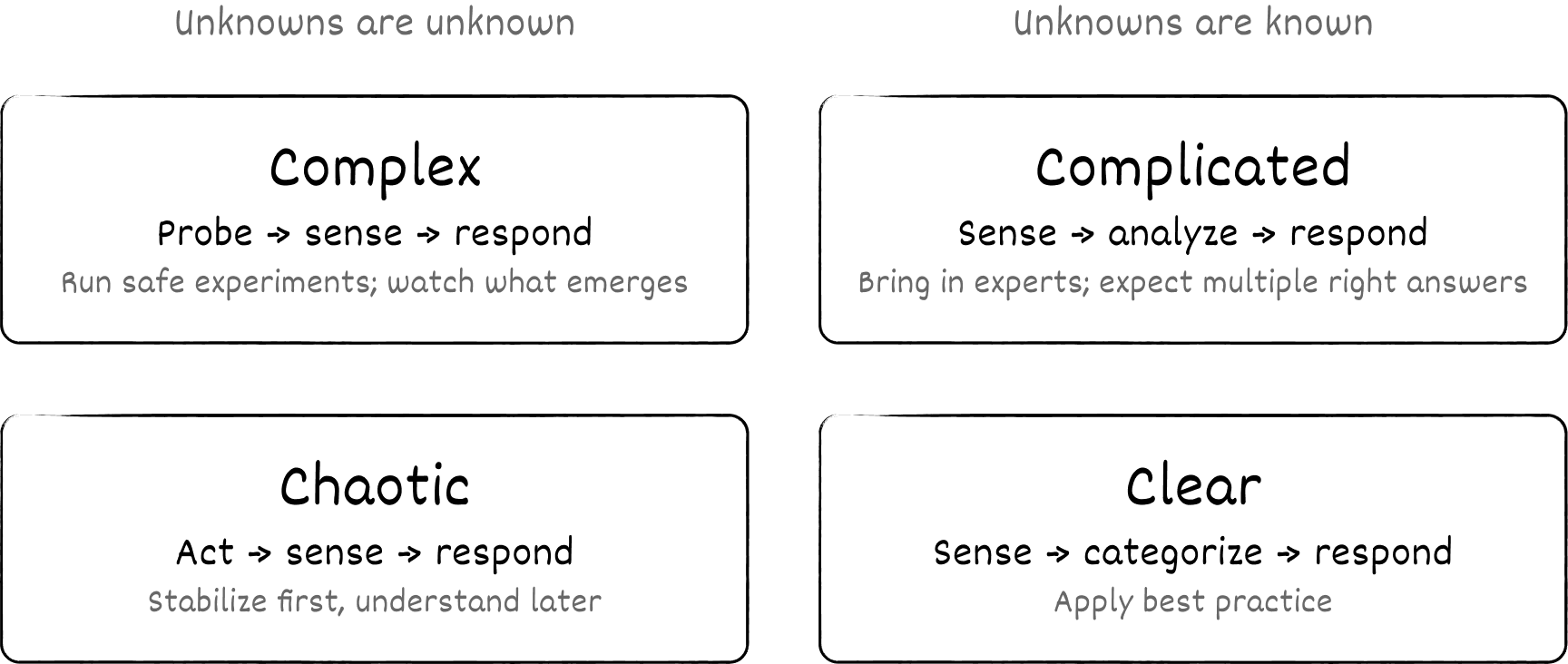
Cynefin framework gives direction on how to approach a problem.
| Decision-making model | What it says |
|---|---|
| Cynefin | Problems are clear, complicated, complex or chaotic, and each needs a different approach |
| One-way vs two-way doors | Decide reversible decisions fast and irreversible ones slowly |
| Pre-mortem | Imagine the project has failed, then explain why |
| Inversion | Ask what would guarantee failure, then avoid it |
| Expected value | Probability × payoff |
| Opportunity cost | The real cost of a choice is the best alternative you gave up |
| Satisficing | Pick the first option that’s good enough |
| OODA loop | Observe, Orient, Decide, Act; whoever cycles faster wins |
| Regret minimization | Which choice will you regret not making at 80? |
| Bayesian updating | Hold beliefs as probabilities and adjust them as evidence arrives |
Prioritizing
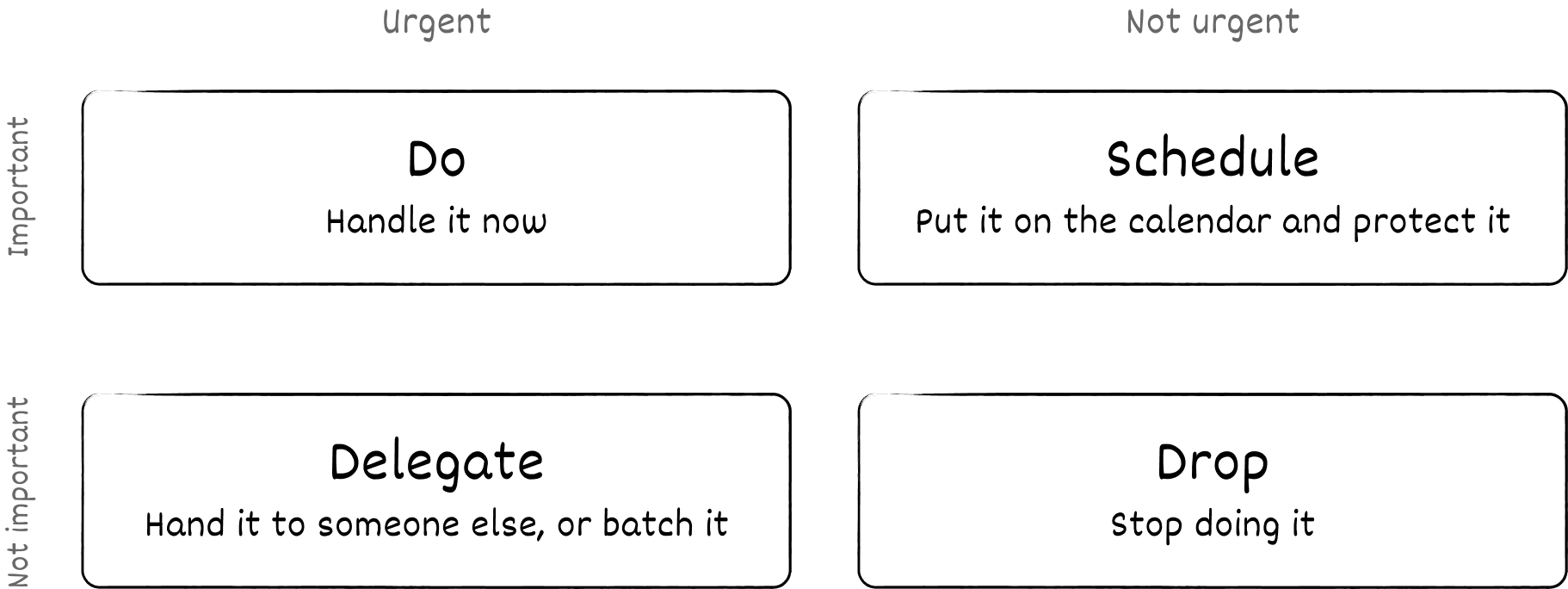
Strategic work is important and rarely urgent, so it needs protecting.
Urgent work pushes itself onto your calendar; important-but-not-urgent work only happens if you book it.
| Tool | How it works |
|---|---|
| RICE | (Reach × Impact × Confidence) ÷ Effort |
| ICE | Impact × Confidence × Ease |
| MoSCoW | Must, Should, Could, Won’t |
| Eisenhower matrix | Urgent vs important |
| Impact vs effort grid | A 2×2 of value against cost |
| Cost of delay | What does waiting cost per week? |
| Pareto principle | A small share of causes produces most of the effect |
Thinking well
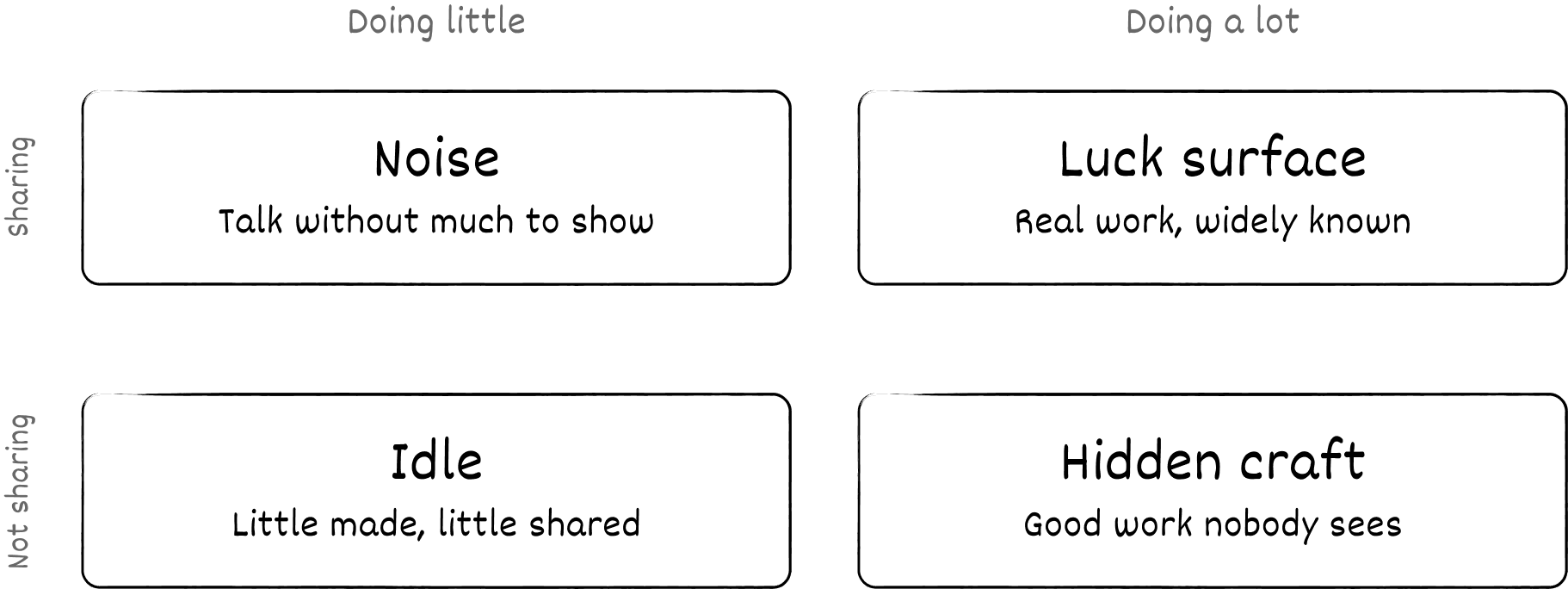
Strongest makers sit in “hidden craft”: the cheapest move is usually more telling, not more doing.
| Principle | What is says |
|---|---|
| First principles | Break a problem down to what’s fundamentally true, rather than reasoning by analogy |
| The map is not the territory | Every model is a simplification |
| Chesterton’s fence | Don’t remove something until you know why it was put there |
| Occam’s razor | Prefer the simplest explanation that fits the facts |
| Hanlon’s razor | Don’t assume malice where confusion explains the behavior |
| Circle of competence | Know where your judgment is reliable and where it isn’t |
| Luck surface area | Luck = Doing × Telling: the more you make and the more people know about it, the more opportunities find you |
How people behave
| Model | What is says |
|---|---|
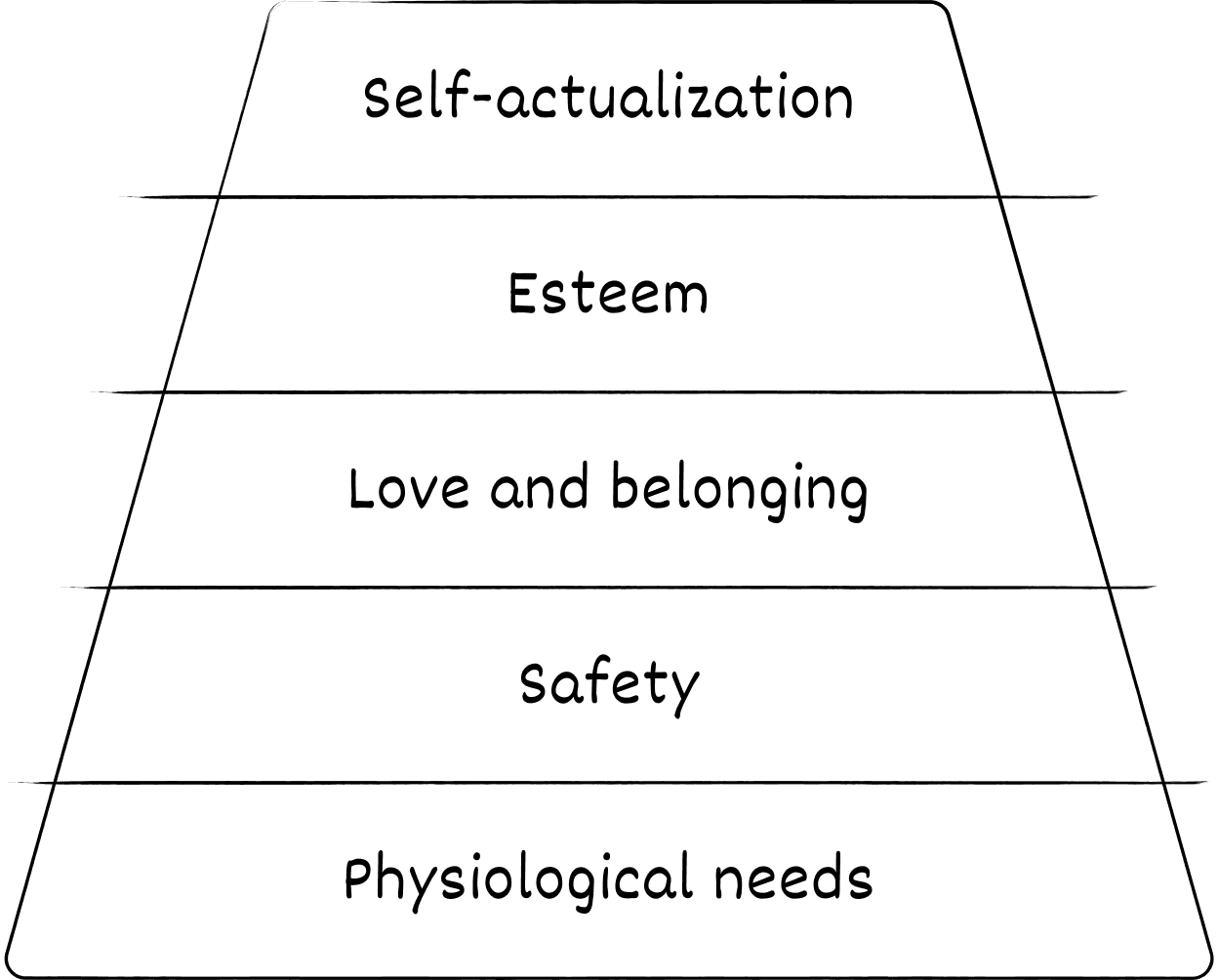
| Maslow’s hierarchy | Needs come in layers; higher ones only matter once lower ones are met |
| Jobs to Be Done | People “hire” products to make progress in a situation |
| Kano model | Features are basic (expected), performance (more is better) or delighters (unexpected); delighters decay into basics |
| Fogg Behavior Model | Behavior = Motivation × Ability × Prompt; if one is missing, nothing happens |
| Loss aversion | Losses hurt roughly twice as much as equal gains feel good |
| Peak–end rule | People remember an experience by its most intense moment and its ending |
| Diffusion of innovations / Crossing the Chasm | Adoption moves from innovators to the majority, with a gap between enthusiasts and pragmatists |
How systems behave
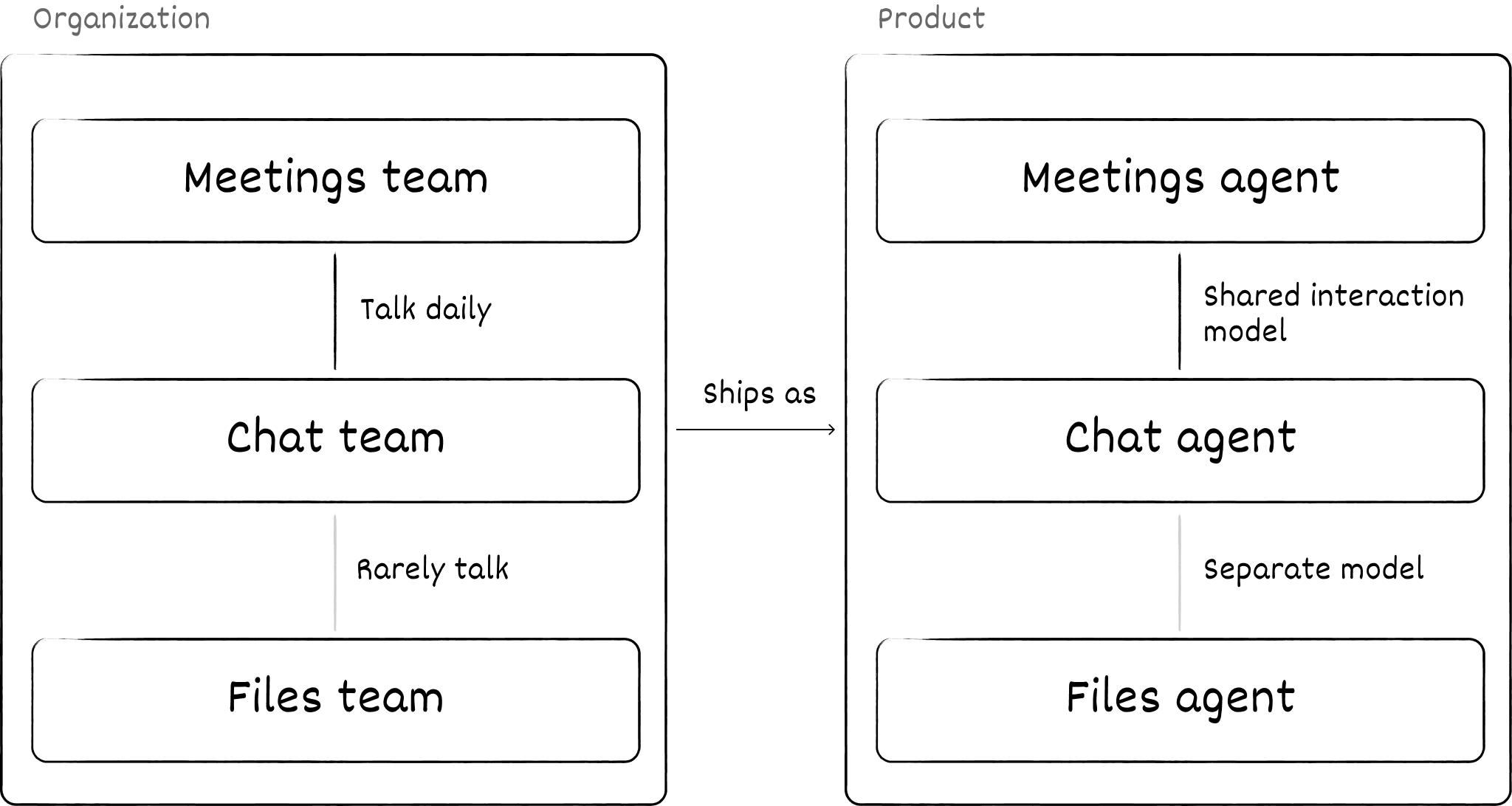
The product mirrors how the teams talk.
| Model | What is says |
|---|---|
| Feedback loops, stocks and flows | Systems are things that accumulate and change; reinforcing loops amplify, balancing loops stabilize |
| Leverage points | The strongest place to intervene is usually rules, goals or defaults, not more effort |
| Second-order thinking | Ask “and then what?”; the first effect is rarely the important one |
| Goodhart’s law | Once a number becomes a target, people optimize the number and it stops measuring what you cared about |
| Conway’s law | Systems mirror the communication structure of the organization that builds them |
| Tragedy of the commons | A shared resource is overused when each person gains and the cost is spread |
| Theory of constraints | A system moves only as fast as its bottleneck |
| Jevons paradox | Making something more efficient can increase total use |
| Network effects | A product becomes more valuable as more people use it |
Strategy and position
| Model | What is says |
|---|---|
| Innovator’s dilemma | Incumbents lose by serving their best customers well while cheaper, “worse” products grow underneath them |
| Wardley mapping | Map product parts by how evolved they are, from novel to commodity; build the novel, buy the commodity |
| 7 Powers | Only seven durable advantages exist, including network effects, switching costs and counter-positioning |
| Porter’s five forces | Competitive pressure comes from rivals, buyers, suppliers, substitutes and new entrants |
| Optionality and the barbell | Keep most bets safe and a few small, wild ones with large upside; prefer choices that keep options open |